The great American dream of homeownership is fading, eclipsed by soaring prices and a profound sense of scarcity. In search of a culprit, public outrage has fixed upon a compelling villain: the institutional investor. The narrative of large firms outbidding families for single-family homes is powerful and emotionally resonant, framing the affordability crisis as a simple battle between Wall Street and Main Street. Yet, this focus, while understandable, misdiagnoses the core disease by concentrating on a single symptom.
The true, data-supported engine of the crisis is not who purchases existing homes, but our catastrophic and systemic failure to produce enough new ones. Affordability is fundamentally a crisis of supply. Restricting buyers merely alters the flow within a stagnant pool and only a revolution in how we build can hope to fill it. We must shift the national conversation from a contentious debate over ownership to an urgent, collaborative mission of industrial-scale production, where innovative systems like InstaBuilt offer the precise, scalable solution.
Blaming institutional buyers conflates correlation with causation. While investor activity increased during periods of sharp price appreciation, this logic ignores the foundational economic principle of elasticity. For decades, housing supply in desirable areas has been rendered almost completely inelastic by a thicket of man-made constraints. Restrictive zoning, slow permitting, a chronic labor shortage, and volatile material costs have collectively strangled construction.
This creates a market where any surge in demand collides with a fixed or barely growing supply, guaranteeing bidding wars and price inflation. Removing one category of buyer from this broken system does not create new supply; it merely temporarily redistributes demand, leaving the fundamental scarcity untouched. The true adversary is not the entity placing a bid, but the system that ensures there are never enough homes to bid on.
If scarcity is the disease, then abundance must be the cure. Achieving this demands a leap beyond our outdated, craft-based construction model into a full-scale industrial revolution for housing. The goal is to transform homebuilding from a slow onsite process plagued by delays into a precise, factory-controlled manufacturing operation.
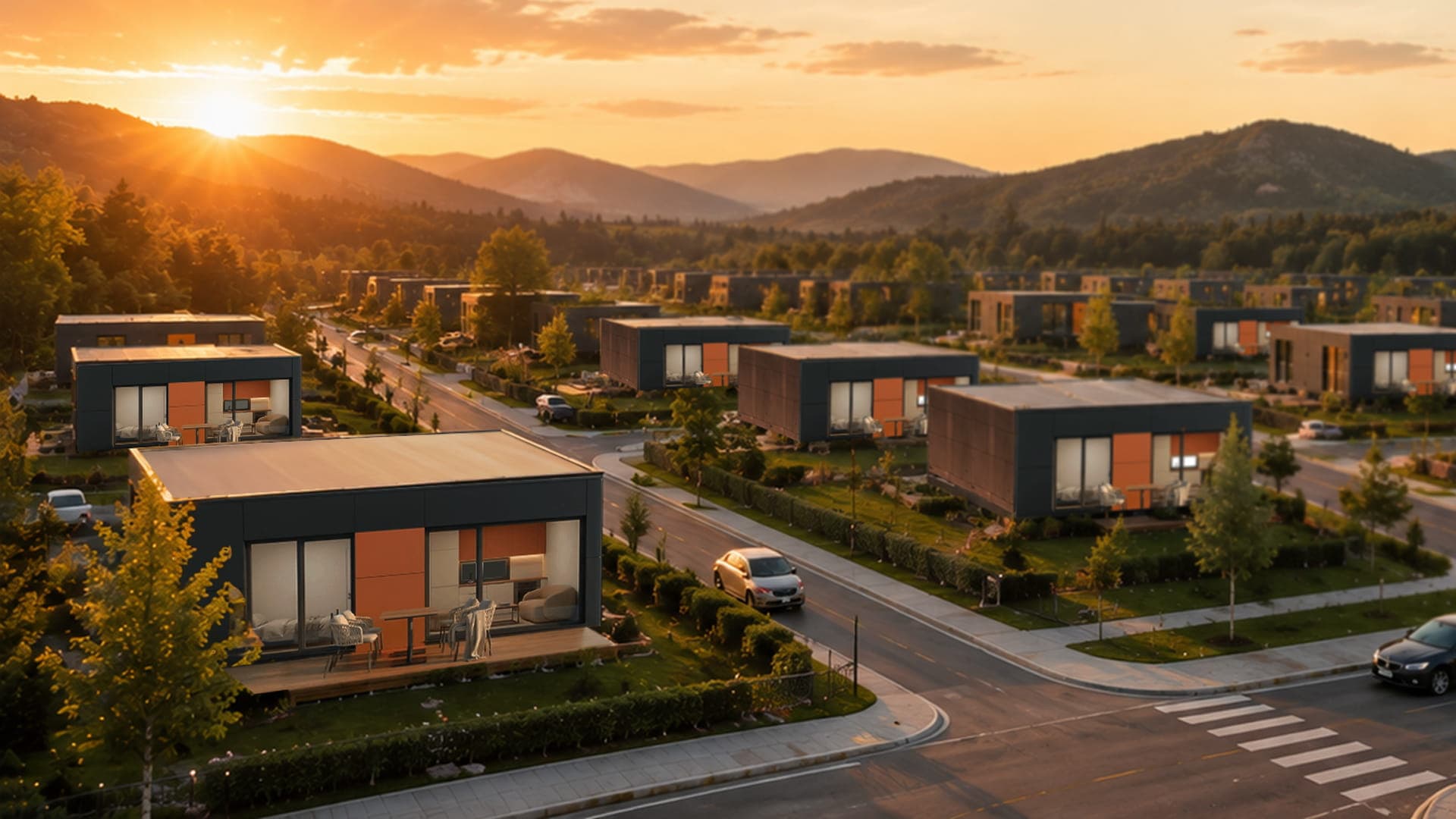
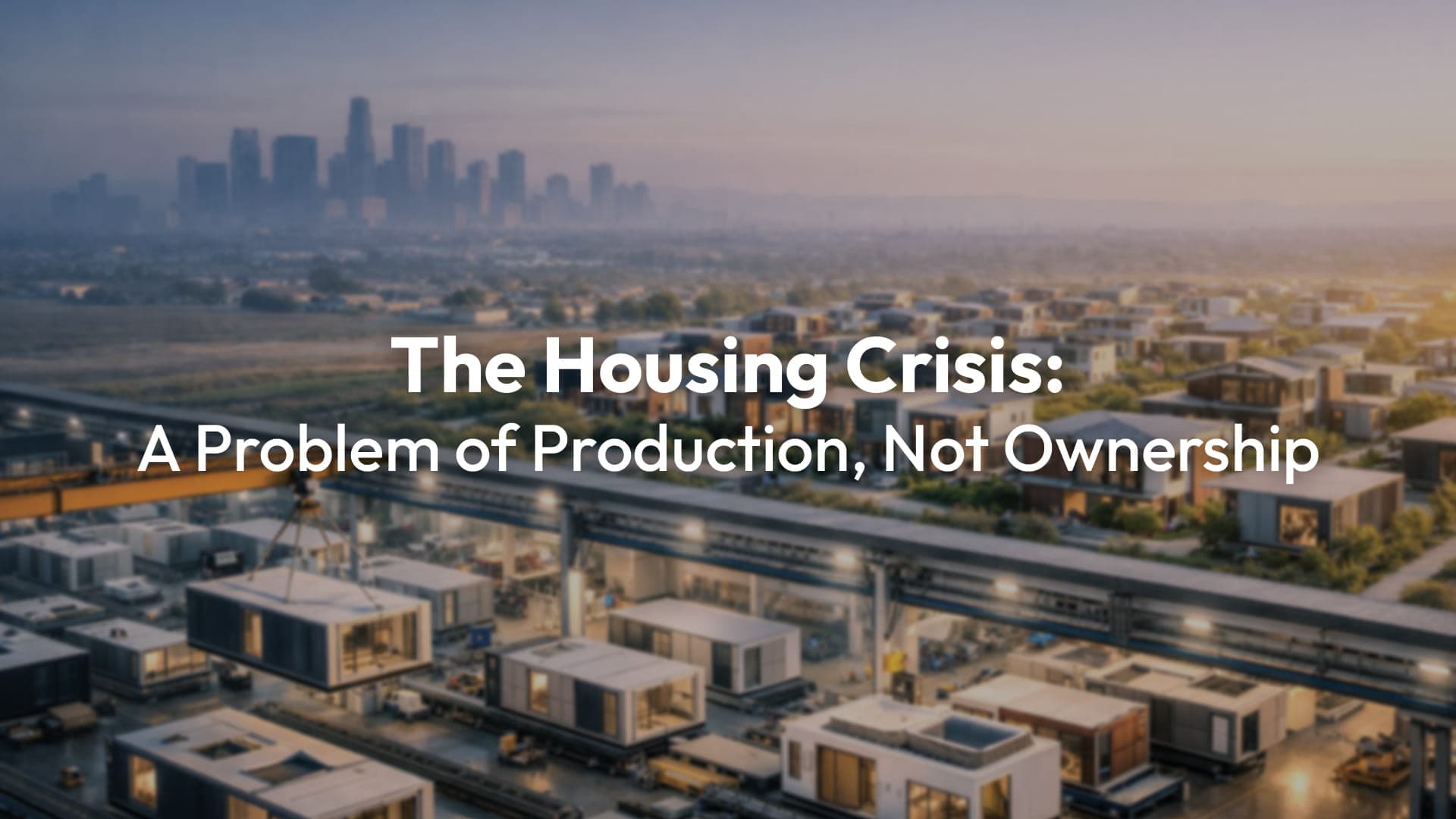
This is the domain of advanced volumetric modular construction, where entire dwelling sections are built in climate-controlled facilities. The efficiencies are transformative, compressing timelines from months to weeks and significantly reducing waste, labor dependencies, and cost volatility. Standardization here is not about uniformity, but about creating intelligent, replicable systems for core structures that enable vast customization in finishes and layouts. This proven model introduces the elasticity we desperately need, allowing supply to scale dynamically to meet demand.
Unlocking this industrial potential requires two key catalysts: exponential technology and sophisticated, long-term capital. Technology acts as a force multiplier across the value chain. Artificial intelligence can streamline design and permitting, robotics ensure precision, and digital platforms create supply-chain transparency. This layer reduces friction and cost at every stage.
Simultaneously, the patient capital of institutional investors shifts from being perceived as a problem to becoming an essential part of the solution. Such capital is uniquely suited to fund the large-scale factories and developments required, particularly within the build-to-rent segment. With an investment horizon aligned with owning durable assets for decades, this capital can be channeled directly into creating new, purpose-built rental supply. This relieves pressure on the for-sale market and provides essential housing options, aligning investor returns with the creation of tangible societal inventory.
A future of industrially produced abundance also creates the opportunity to design smarter, more equitable housing policy. The legitimate concern for protecting families is not dismissed but can be addressed more effectively from a position of strength. With a robust pipeline of new homes, policymakers can craft nuanced, targeted rules rather than resorting to blunt restrictions.
Mechanisms like first-buyer priority periods, community land trusts, or clear zoning for owner-occupied versus rental corridors can ensure balanced communities. Furthermore, this industrialized model is inherently aligned with critical sustainability goals. Factory construction drastically reduces material waste, enables superior energy efficiency, and facilitates the integration of smart home technologies. A home built better from the start is more affordable to operate and has a lighter environmental footprint, creating a virtuous circle for occupants and the planet.
The housing affordability crisis will not be solved by focusing on who owns existing stock. The only lasting solution is to confront the supply-side paralysis with manufacturing ingenuity, technological innovation, and capital aligned with production. By reimagining the home as a sophisticated, sustainably manufactured product, we can build our way toward a market defined by choice and accessibility. The dream of attainable, quality housing is an achievable goal awaiting a new industrial playbook. The time has come to stop debating who gets a key and to start building more doors.