For decades, industries have evolved within their own boundaries. Real estate focused on buildings and infrastructure. Technology concentrated on digital innovation and connectivity. Energy providers worked to generate and distribute power. Each sector advanced independently, creating significant value within its own ecosystem.
Today, however, the world's most transformative opportunities are emerging not from individual industries but from the integration of multiple sectors working together toward common goals.
The convergence of real estate, technology, and energy is redefining how people live, work, and interact with the built environment. Rather than operating as separate industries, these sectors are increasingly becoming interconnected components of a larger, smarter, and more sustainable ecosystem.
This shift represents one of the most important developments shaping the future of cities, communities, and economic growth.
Modern buildings are no longer static physical structures. They are becoming intelligent platforms capable of generating, storing, managing, and optimizing resources. Through advanced technologies, buildings can monitor energy consumption, automate operations, improve occupant experiences, and contribute to broader sustainability objectives.
At the same time, energy systems are evolving beyond centralized generation models. Renewable energy sources, battery storage solutions, and smart grids are creating decentralized networks where buildings themselves become active participants in energy production and management. Real estate assets are transforming from energy consumers into energy contributors.
Technology serves as the connecting layer that enables this transformation. Artificial intelligence, Internet of Things (IoT) devices, digital twins, blockchain systems, cloud computing, and advanced analytics provide the intelligence required to connect physical infrastructure with energy systems. These technologies allow real-time decision-making, predictive maintenance, operational efficiency, and enhanced user experiences. The result is a powerful ecosystem where each industry strengthens the others.
When real estate integrates technology, buildings become smarter and more efficient. When real estate integrates energy solutions, properties become more sustainable and resilient. When technology integrates with energy systems, consumption patterns become optimized and resources are utilized more effectively. When all three sectors converge, entirely new business models and opportunities emerge.
This integrated approach creates value at multiple levels. For individuals, this means healthier living environments, lower utility costs, improved comfort, and increased convenience. For businesses, it means greater operational efficiency, lower costs, better asset performance, and increased competitiveness. For communities, it means reduced environmental impact, greater resilience, improved infrastructure, and stronger economic development. For investors, it means access to future-oriented assets capable of generating long-term value in a rapidly changing global economy.
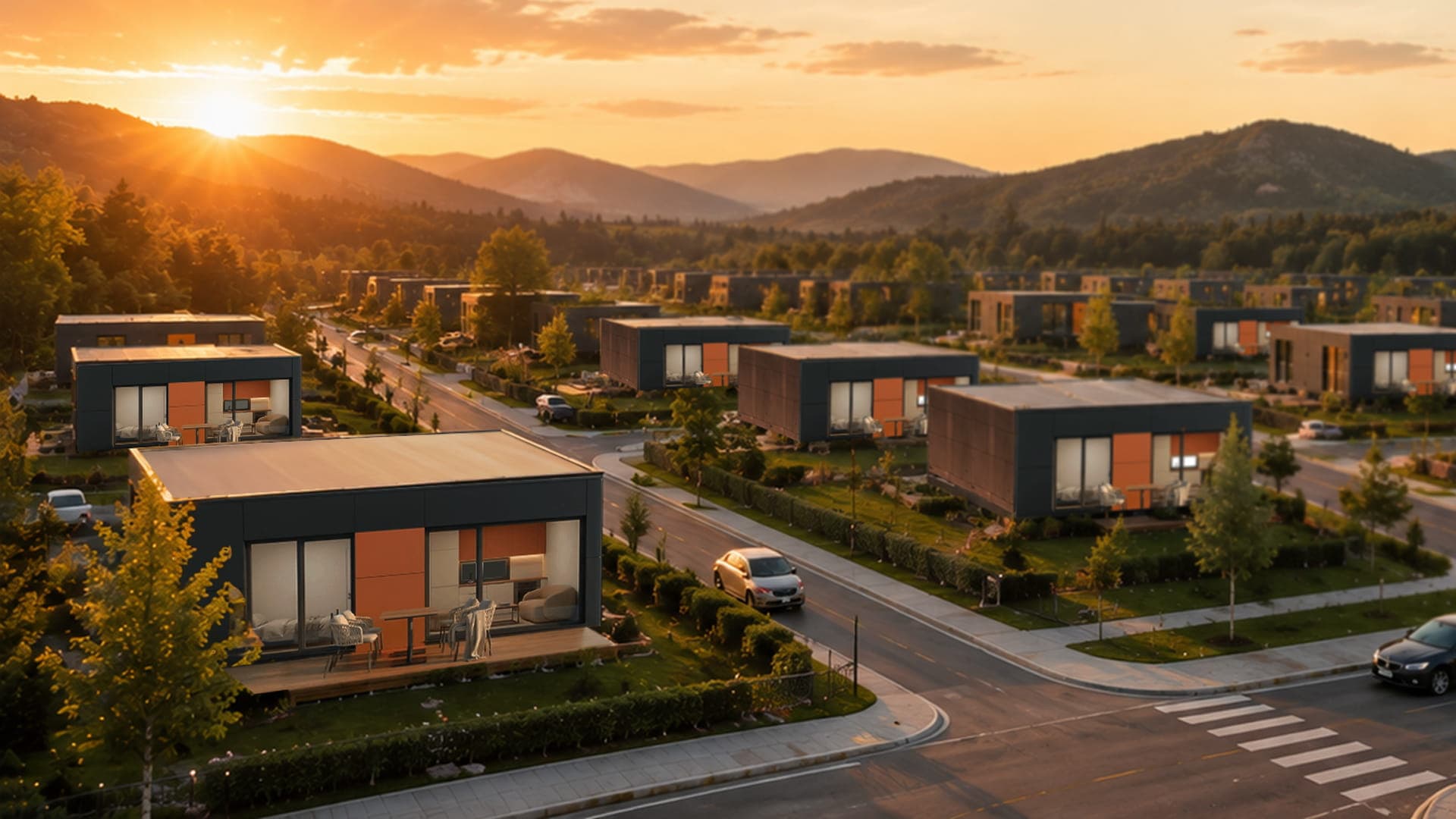
Around the world, leading cities are already embracing this integrated model. Smart communities are being developed with digital infrastructure embedded from the earliest planning stages. Renewable energy systems are incorporated directly into residential and commercial projects. Data-driven management platforms continuously optimize operations, sustainability performance, and resource allocation.
These developments demonstrate an important principle: integration creates exponential value.
Traditional approaches often focus on optimizing individual components. Integrated ecosystems focus on optimizing the relationships between components. The difference is significant.
A building equipped with advanced technology becomes more efficient. A building powered by renewable energy becomes more sustainable. A building that combines intelligent technology, renewable energy systems, and innovative real estate design becomes part of a living ecosystem capable of adapting, learning, and continuously improving.
This ecosystem perspective is increasingly important as societies face challenges related to urbanization, climate change, resource efficiency, and economic competitiveness. No single industry can address these challenges independently. Solutions require collaboration across disciplines and sectors.
The future belongs to organizations capable of thinking beyond traditional industry boundaries. Success will increasingly depend on the ability to connect expertise, technologies, and resources into integrated solutions that create value for multiple stakeholders simultaneously.
For innovation-driven organizations, this presents a remarkable opportunity. By bringing together real estate, technology, and energy, it becomes possible to create environments that are not only functional and efficient but also intelligent, sustainable, and future-ready.
The next generation of communities will not be defined solely by the quality of their buildings. They will be defined by the intelligence embedded within them, the sustainability of their energy systems, and the seamless integration of technologies that improve everyday life.
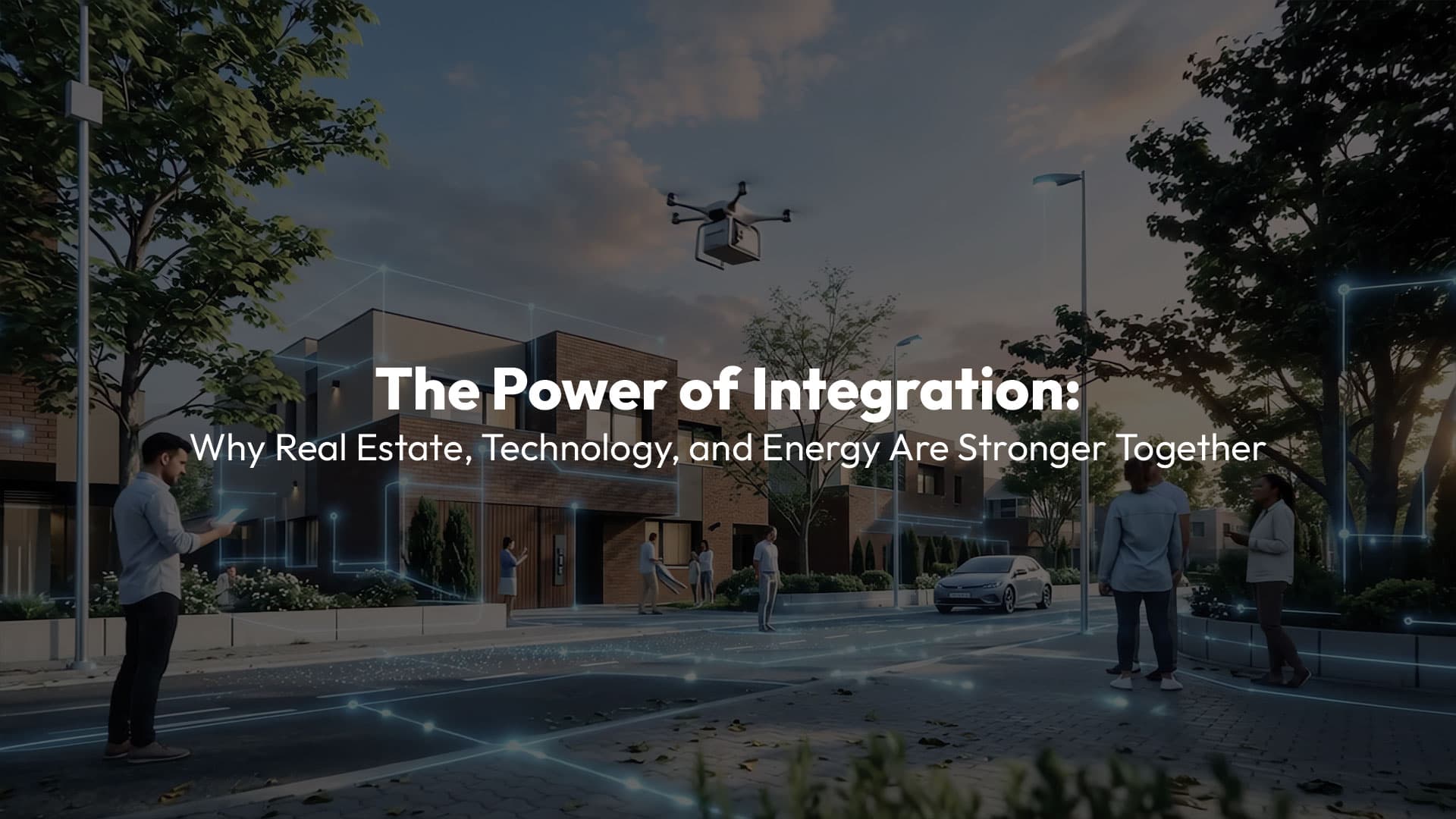
As industries continue to converge, the distinction between physical infrastructure, digital systems, and energy networks will become increasingly blurred. What will emerge is a connected ecosystem where buildings communicate, energy flows intelligently, and technology continuously enhances performance.
The most powerful innovations of the coming decades will not originate within isolated sectors. They will emerge at the intersection of industries, where collaboration unlocks possibilities that individual sectors cannot achieve alone. The future is not about real estate, technology, or energy independently. The future is about their integration.
And those who embrace this interconnected vision today will help shape the sustainable, intelligent, and resilient communities of tomorrow.